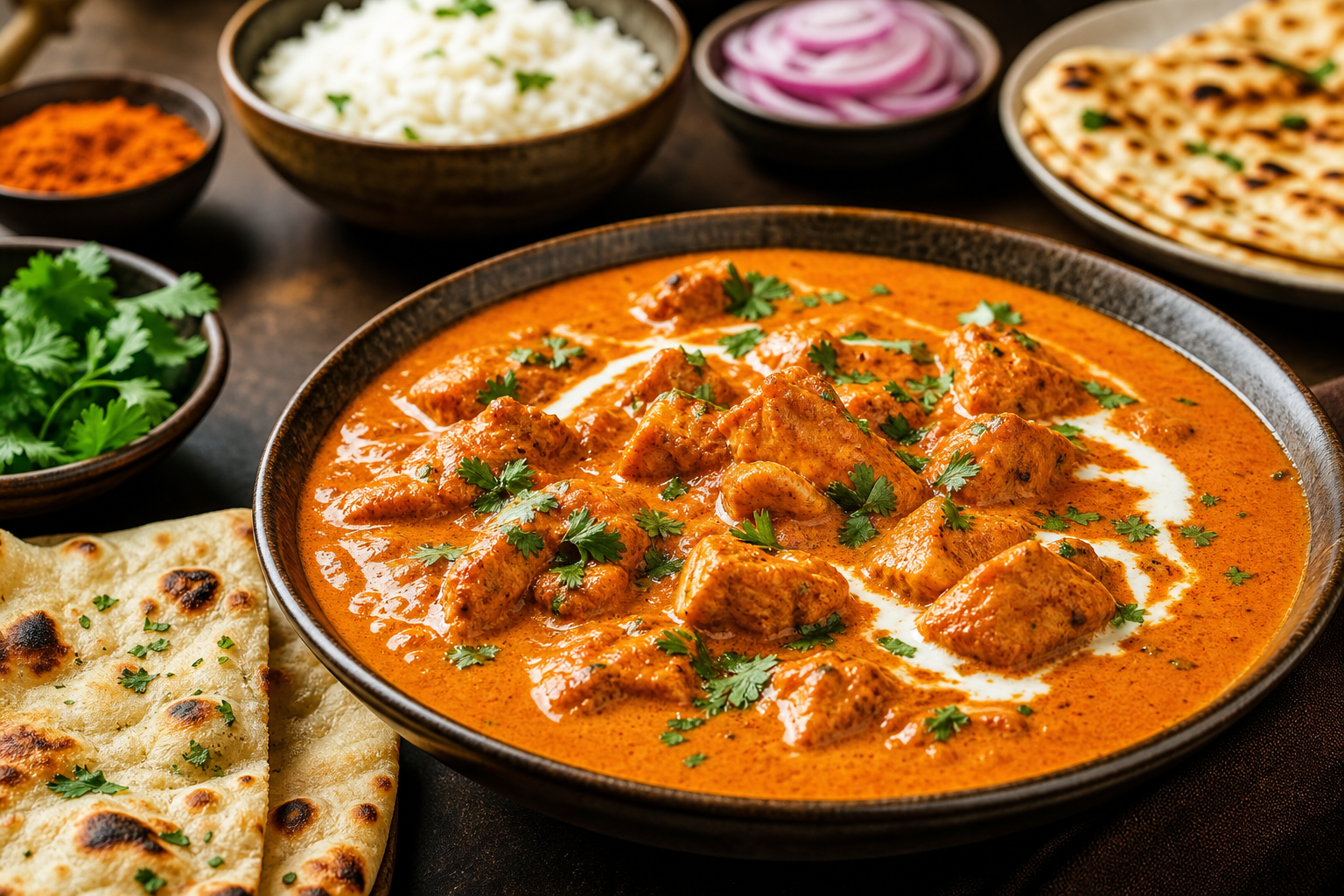
Butter chicken can fit two different weeknight plans: build the dish on the stovetop, or use a one-pot recipe written for the exact appliance you own. This guide explains how to choose between those formats, organize ingredients, evaluate doneness safely, adjust the sauce by observation, and order an Edmonton restaurant version when cooking is not the right choice. It is a method guide rather than a fixed, tested formula, so use a verified recipe for exact quantities and appliance settings.
Butter chicken, also called murgh makhani, is generally described as chicken in a spiced, tomato-and-butter-based gravy with a creamy texture (butter chicken overview). That description identifies the dish’s core structure without requiring every cook or restaurant to use the same spice blend, dairy choice, texture, or level of heat.
Choose the cooking format before choosing quantities
A stovetop approach gives the cook direct control over browning, sauce reduction, and the final creamy element. A one-pot approach reduces transfers between pans, but it should follow instructions designed for the exact cooker and recipe. Do not convert a skillet recipe into a pressure-cooker recipe by guessing a universal pressure time or liquid amount.
- Choose stovetop when you want to observe each stage, adjust the sauce gradually, and check individual chicken pieces as they finish cooking.
- Choose one-pot when you have a verified recipe for your appliance and want fewer separate cooking vessels. Follow its minimum-liquid, pressure, release, and maximum-fill directions.
- Choose restaurant ordering when you want a ready-to-eat version, need predictable menu choices, or do not have time to verify ingredients and follow a full recipe safely.
“Fast” should describe an organized workflow, not a promise that one time applies to every pan, chicken cut, batch size, stove, or multicooker. Read a selected recipe completely before starting and keep its quantities, food-safety steps, and appliance directions together.
Build an ingredient plan that keeps the sauce balanced
Start with the core structure: chicken, a tomato component, butter or another chosen cooking fat, a creamy finishing element, aromatics, and a spice blend suited to your preferred heat level. The exact amount of each ingredient belongs to the verified recipe you select. Avoid combining quantities from unrelated recipes because their tomato concentration, chicken size, dairy, and cooking methods may not be compatible.
- Chicken: Pick the cut specified by the recipe. Different cuts and piece sizes cook differently, so use its preparation and doneness instructions.
- Tomato component: Crushed tomatoes, purée, or paste are not interchangeable in equal amounts. Follow the recipe’s stated product and dilution.
- Creamy finish: Dairy cream, yogurt, or a plant-based alternative behaves differently when heated. Use the ingredient and sequence tested by the recipe instead of assuming a direct substitution.
- Spice and heat: Separate aromatic warmth from chile heat. Begin with the recipe’s baseline and make table-side additions when cooking for people with different preferences.
- Salt and acidity: Taste the finished sauce before making a final adjustment. Tomato products, butter, stock, and prepared spice blends can contribute different amounts.
Stovetop recipe framework: control each stage
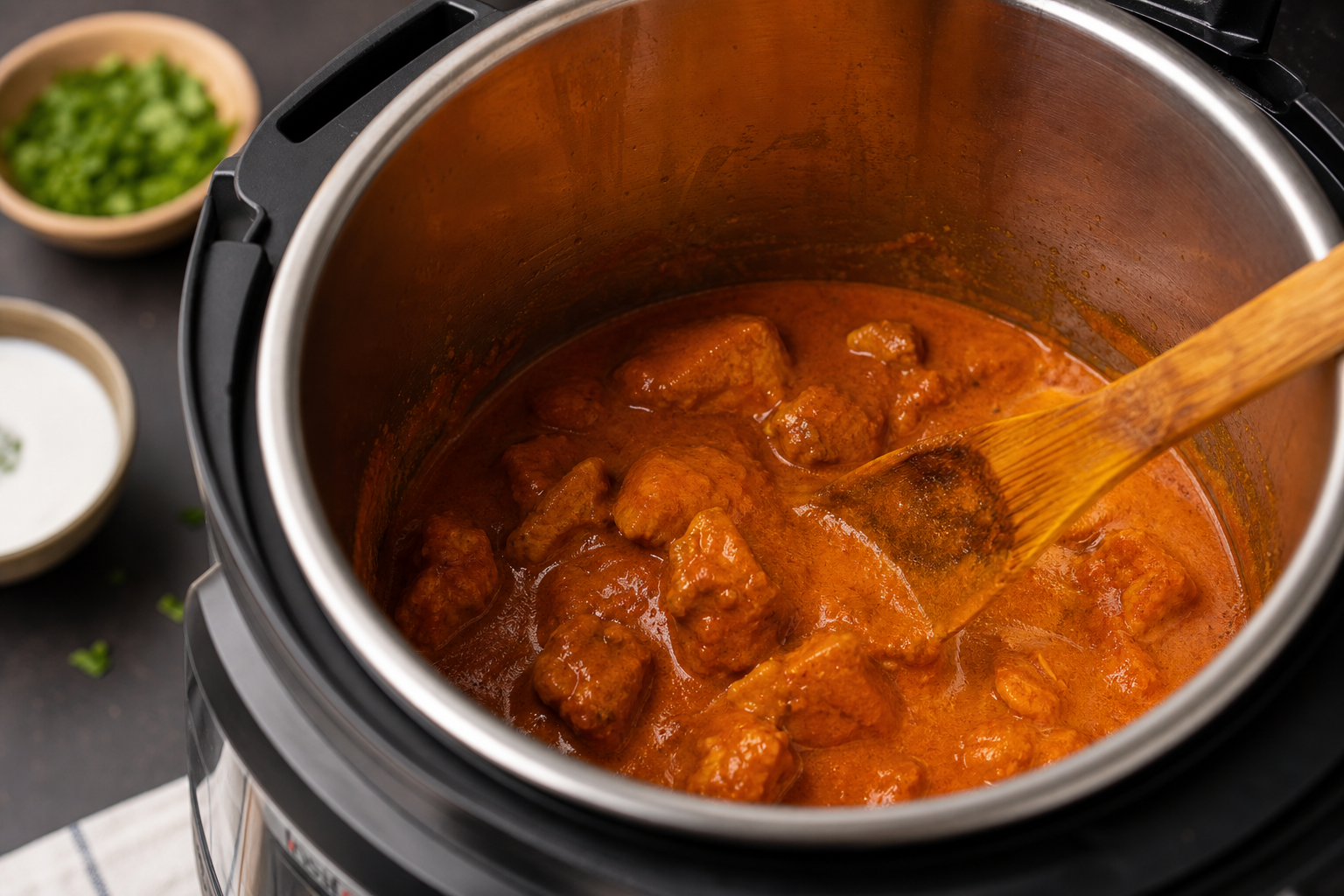
Use this sequence with quantities and heat settings from a tested stovetop butter chicken recipe:
- Prepare safely. Keep raw chicken refrigerated until preparation. Use separate or thoroughly cleaned tools and surfaces so raw poultry does not contact ready-to-eat food.
- Prepare the chicken as directed. Follow the selected recipe for cut, piece size, seasoning, and any marination. Health Canada advises cooks to marinate meat in the refrigerator, not on the counter.
- Cook the chicken. Brown or cook it using the recipe’s pan, heat, and sequence. Colour and clear juices are not reliable proof of safety.
- Build the sauce. Cook aromatics and spices as directed, add the specified tomato component, and adjust heat so the sauce cooks without scorching.
- Finish and verify. Combine chicken and sauce according to the recipe. Health Canada lists 74°C (165°F) as the safe internal temperature for poultry pieces; check the thickest pieces with a digital food thermometer (Health Canada safe cooking temperatures).
- Add the creamy element as directed. Use the recipe’s heat level and order of addition, then taste and adjust only after the chicken is safely cooked.
If the sauce is thinner than expected, compare it with the recipe before adding an untested thickener. The pan size, tomato product, water released by chicken, and heat level can all change reduction. If it is too thick, use the liquid recommended by that recipe rather than automatically adding dairy, which can also change flavour and richness.
One-pot recipe framework: follow the appliance-specific design
A genuine one-pot version should be written for the vessel being used. A heavy stovetop pot and an electric pressure cooker are not the same method. For a stovetop one-pot recipe, follow its order for aromatics, chicken, tomato, and the creamy finish. For a pressure-cooker recipe, follow the appliance manual and a tested recipe that states the required liquid, pressure program, release method, and maximum fill.
- Confirm that the recipe names your cooking format and does not merely label a skillet dish “one pot.”
- Use the specified chicken cut, piece size, tomato product, and liquid. Pressure cookers require enough suitable liquid to operate correctly.
- Keep dairy or other ingredients that can scorch out of the pressure stage when the tested recipe instructs you to add them later.
- Follow the stated release method. Do not substitute an unverified appliance preset for recipe-specific directions.
- After opening, check the thickest chicken pieces with a clean digital thermometer and confirm at least 74°C (165°F). Continue cooking safely if the target has not been reached.
- Adjust sauce consistency only after doneness is confirmed and the recipe’s finishing ingredients have been added.
This framework supplies real decision points without inventing a universal pressure time. Exact settings depend on the tested recipe, the appliance, ingredient temperature, liquid, batch size, and the size of the chicken pieces.
Practical sauce and serving choices
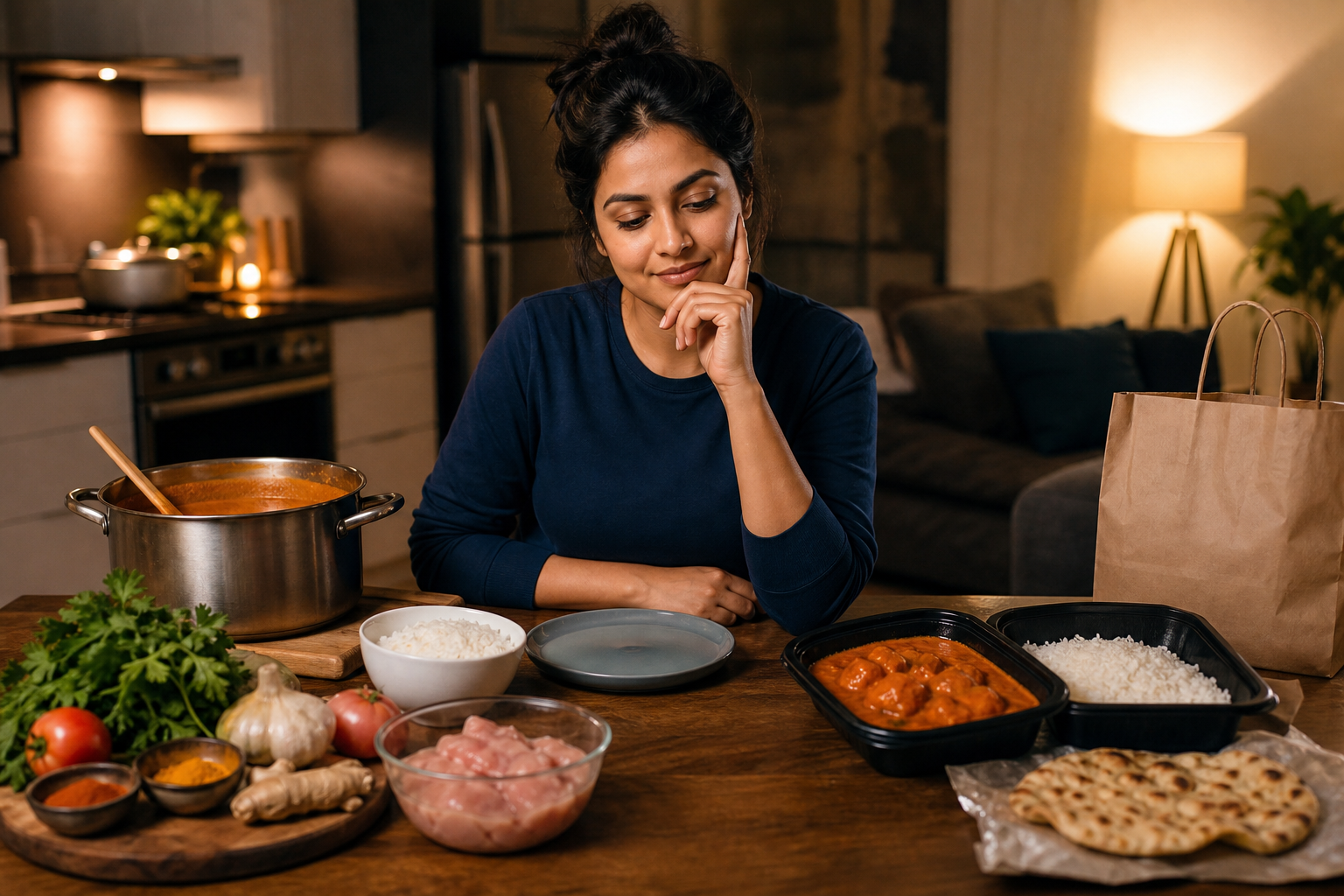
Make one adjustment at a time so you know what changed. For a milder dish, reduce or omit an optional chile ingredient while keeping the aromatic spices specified by the recipe. For a richer finish, use the recipe’s finishing dairy or alternative. If using a substitution, choose a recipe that has tested that substitution whenever possible instead of assuming identical behaviour.
Choose accompaniments based on the meal you want and the restaurant or recipe you are following. Rice and breads are common menu partners, but portion needs vary. Avoid promises that one combination will always be enough for a person or family; review the current menu sizes or the yield stated by the tested recipe.
For leftovers, cool and store food promptly using current food-safety guidance. Reheat leftovers to 74°C (165°F) and verify the temperature rather than relying only on steam, colour, or texture.
Frequently asked questions
Can I use chicken breast instead of thighs?
Use the cut supported by your selected recipe, or choose a tested variation for the cut you have. Piece size and cooking sequence may need to change, while every piece still needs to reach 74°C (165°F).
Can butter chicken be dairy-free?
Yes, if you choose a recipe developed with a suitable dairy-free fat and creamy element. A direct swap can change flavour, texture, and heat behaviour, so use tested quantities rather than assuming a one-to-one replacement.
How do I know the chicken is cooked?
Measure the thickest pieces with a clean digital food thermometer. For poultry pieces, Health Canada specifies 74°C (165°F). Colour and juices are not a substitute for measuring temperature.
Can I convert any stovetop recipe to a pressure cooker?
No universal conversion is safe or reliable. Use a version written for the appliance and follow its liquid, fill, pressure, release, and finishing instructions together with the manufacturer’s manual.
Craving Authentic Indian Food in Edmonton?
Order Edmonton's favourite Butter Chicken, Lamb Biryani, and award-winning vegan dishes from DIVINE – The Indian Cuisine on Jasper Avenue.
Order Online Now