What dal is and why it matters in Indian cooking
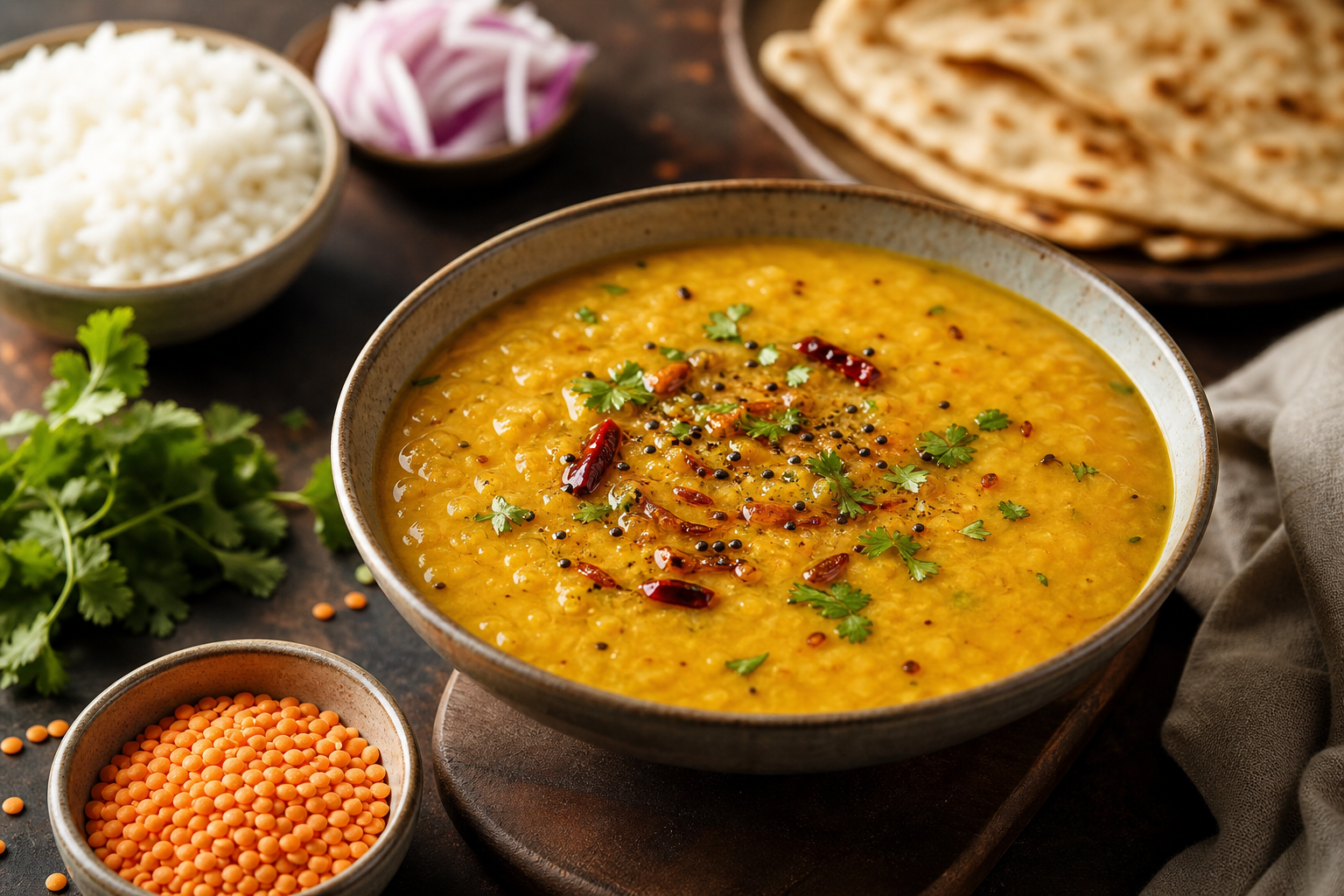
Dal is the broad name for lentil‑based dishes that appear across South Asian home kitchens and restaurants. The word refers both to the dried pulses themselves and to the cooked stew or soup made from them. Dal can be thin and soupy, thick and creamy, mild or highly spiced, and it routinely functions as a main source of plant protein, a comforting staple, and a quick weekday meal. Trusted culinary sources describe dal as a family of recipes where finishing a cooked pot of lentils with a hot spiced oil, called a tadka or tempering, adds a final aromatic lift that many people expect in authentic preparations (see Food Network for technique notes on tadka and lentil cooking).
Dal as a category
Think of dal as a spectrum rather than one recipe: red lentil dal cooks fast and breaks down into a soft, porridge‑like texture; split peas and pigeon peas produce thicker, chunkier dals that hold their shape; and some dals are simmered with vegetables, coconut milk, or roasted whole spices for specific regional profiles.
Why lentils matter nutritionally and practically
Lentils are shelf stable, inexpensive, and quick to cook relative to many proteins, which makes dal a practical weeknight option. Beyond convenience, dal stretches easily to feed several people, pairs with rice or breads, and adapts to vegetarian and vegan diets.
Tadka in one sentence
Tadka means briefly frying spices in hot oil or ghee and pouring that flavoured oil over finished dal; it is a small technical step that brightens the dish and introduces toasted spice notes (see a spiced red lentil dal technique guide at Food Network for examples).
The basic anatomy of a lentil dal
When you break a dal down into its components, you can control texture, spice, and timing more predictably. The main parts are the lentils, the cooking liquid, aromatics (onion, garlic, ginger), spices, and the finishing tadka.
Lentil types and how they behave
- Red lentils (masoor dal): fast‑cooking, they fall apart and make a smooth dal.
- Yellow split lentils or pigeon peas (toor, chana, moong): creamier or chunkier depending on split or whole form and require slightly longer simmering.
- Whole lentils (brown, green): hold shape and suit salads and stews rather than a silky dal.
Consistency and water rules
Consistency is a personal choice: a soupier dal is common for spooning over rice, while a thicker dal is served alongside breads. Use more water for a stew‑style result and less for a mash. For red lentils, a practical starting point is roughly one part lentils to two to three parts liquid, adjusting as they cook and absorb water.
When to salt and spice
Add salt partway through cooking rather than at the very beginning so lentils soften reliably. Whole spices and tough aromatics can be added early; delicate finishes and the tadka come last so their fragrance remains fresh.
What tadka does
Tadka provides a concentrated flavour boost. A basic tadka is hot oil, mustard seeds or cumin, dried red chilli or fresh chiles, and a pinch of asafoetida or curry leaves if you like. Fry briefly until aromatic and immediately pour over the dal so the oil carries the toasted spice aroma into the dish.
Simple red lentil dal recipe (step-by-step)
Ingredients
- 1 cup red lentils, rinsed and drained
- 2 to 3 cups water or low‑sodium vegetable stock
- 1 small onion, finely chopped
- 1 clove garlic, minced
- 1/2-inch piece ginger, minced or grated
- 1 medium tomato, chopped or 1/2 cup canned tomatoes
- 1 teaspoon ground turmeric
- 1/2 to 1 teaspoon ground cumin or garam masala, to taste
- Salt to taste
- For tadka: 2 tablespoons oil or neutral ghee, 1 teaspoon cumin seeds, 1 dried red chilli or 1/2 teaspoon crushed red pepper, pinch of asafoetida if available
- Fresh cilantro for garnish, optional
Step-by-step method
- Rinse the lentils under cold water until the rinse runs clear. This removes excess starch and reduces foaming.
- Combine rinsed lentils, water or stock, turmeric, and half the salt in a saucepan. Bring to a gentle boil, then lower heat and simmer, uncovered, stirring occasionally. Red lentils typically become tender in a short range of time; culinary sources note roughly 15 to 20 minutes for tender red lentils, depending on heat and variety (Food Network timing notes).
- While the lentils cook, heat a tablespoon of oil in a separate skillet. Sauté onion until translucent, then add garlic and ginger for a minute. Add chopped tomato and spices, and cook until the tomato softens and the raw smell of spices disappears.
- When the lentils are soft, taste and correct seasoning. If the pot seems too thick, add a splash of water and stir to loosen the texture.
- Prepare the tadka: warm 2 tablespoons oil until hot, add cumin seeds and the chilli, and fry briefly until the seeds crackle and the oil is fragrant. Immediately pour the hot spiced oil over the cooked dal. Stir gently so the flavours meld.
- Garnish with chopped cilantro and serve warm with steamed rice or bread.
Tadka: technique and timing
Keep the oil hot but not smoking for tadka, and add seeds or whole spices first so they pop and infuse the oil. Work carefully: hot oil can spit when it meets moist food, so pour the tadka slowly and stand back a moment as you combine it with the dal.
Timing and yield
This recipe is workable as an easy weeknight dinner. Expect active prep of 10 to 15 minutes and total cook time in the lower end of the lentil tenderness range noted above, depending on your stove. The pot will make roughly three to four modest adult servings, suitable for pairing with rice or a couple of breads.
Three practical variations to try
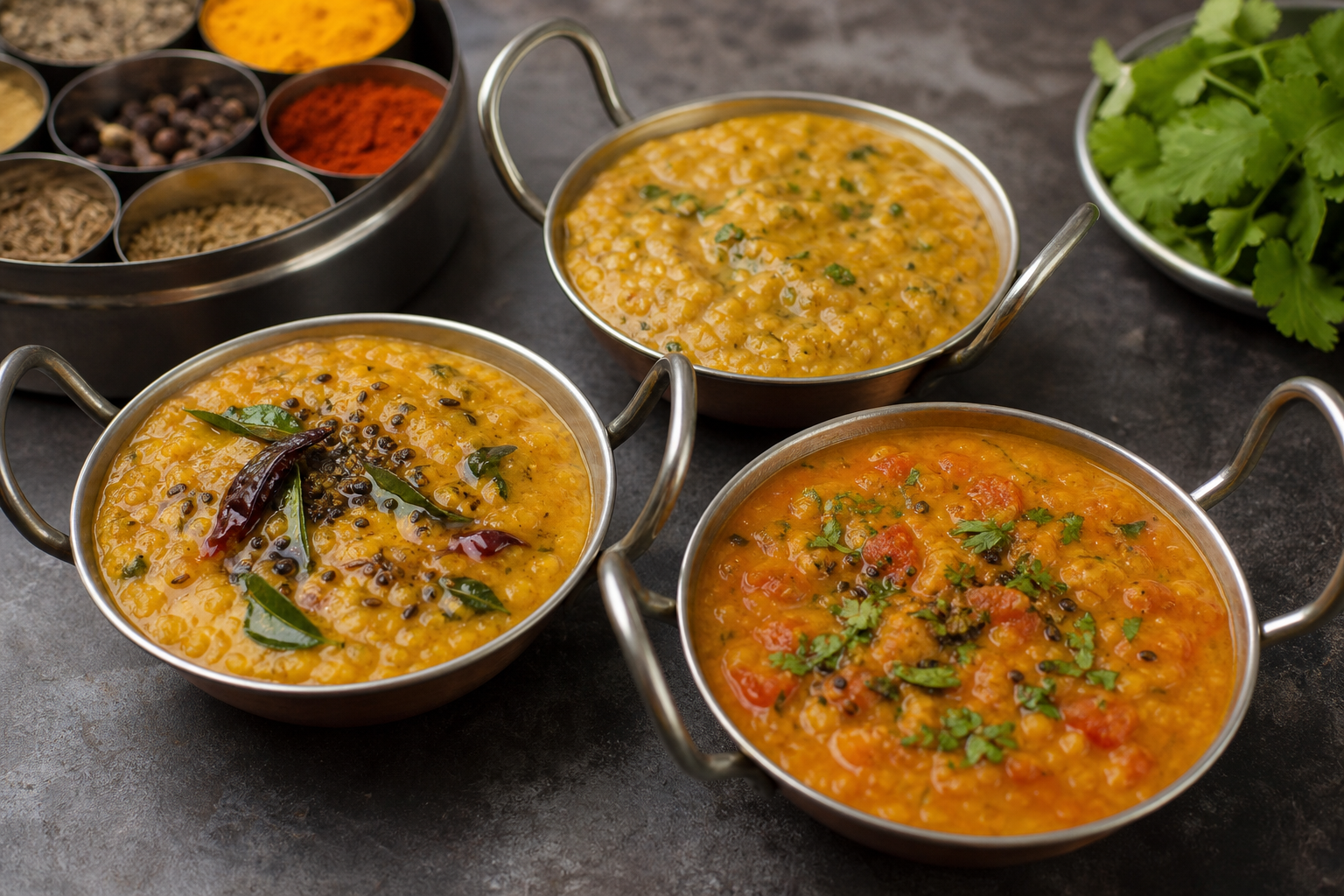
1. Yellow split‑lentil dal
Use split yellow lentils or toor dal and increase simmer time slightly for a creamier, buttery texture. Finish with a small pat of butter or ghee for richness and a squeeze of lemon if you want extra brightness.
2. Coconut‑vegetable dal
Add 1/2 cup coconut milk near the end of cooking and fold in quick‑cooking vegetables such as diced carrot, spinach, or frozen peas. This variation yields a mild, slightly sweet dal that pairs well with fragrant rice.
3. Quick spiced dal
Simplify for time pressure: skip the sautéed onion stage, add a pinch more turmeric and cumin to the cooking pot, and use a brisk, bright tadka with extra chilli and garlic to compensate. This produces a punchy dal in less total time.
Serving, pairings and portion guidance
Pairing by texture and spice level
Silky red lentil dal is ideal with steamed rice or soft breads. For local takeout pairings, Divine - The Indian Cuisine highlights breads and rice on its menu, such as butter naan and saffron rice, which are natural companions when you prefer not to cook the accompaniments at home; you can order online for pickup or delivery from the restaurant's site.
Portion guide for families and singles
Plan about one modest bowl of dal per adult when served with rice and one to two accompaniments. For a heartier main, increase the portion or add a protein side. Leftovers make an easy second meal.
Garnish and sides
- Fresh cilantro, thinly sliced green chilli, or a squeeze of lemon
- A small side of pickles, plain yogurt, or a fried papad for contrast
- Warm breads such as butter naan for dipping
Storage, reheating and make-ahead tips
How to cool and store dal
Cool dal at room temperature until no longer steaming, then refrigerate in airtight containers. Avoid leaving cooked food at room temperature for prolonged periods. Dal keeps flavourfully for several days in the fridge and also freezes well for longer storage.
Reheating without splitting
Reheat gently over low to medium heat, adding a splash of water while stirring to restore the original consistency. If the dal separates or looks grainy after freezing, a short simmer while whisking will usually bring it back together.
Make‑ahead strategies
Cook larger batches and store in portioned containers for quick meals. Reserve the tadka separately when possible and add fresh after reheating to keep the topping bright and crisp.
Troubleshooting common mistakes
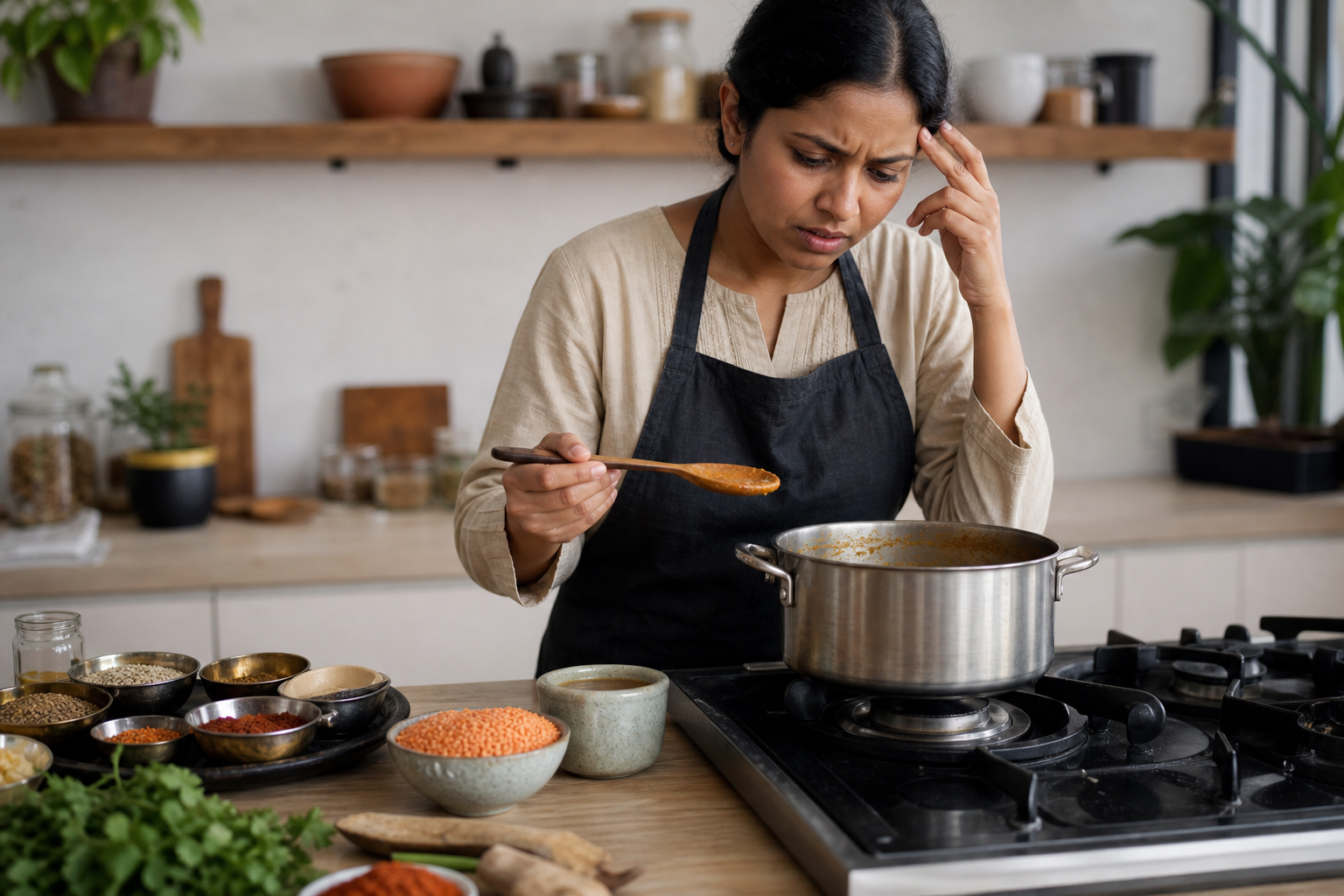
Rescue a bland dal
If the flavour is flat, warm a small amount of oil, fry a pinch of cumin and crushed chilli, and stir that tadka into the dal. A squeeze of lemon or a spoonful of plain yogurt can also lift the profile.
Fix texture problems
Too thin: simmer uncovered to reduce volume or mash a portion of the dal to thicken. Too thick: add hot water or stock a little at a time. Lentils that do not soften may be old; try a longer simmer with the lid on or add a pinch of baking soda to speed softening in stubborn cases.
Tadka that tastes bitter
Reduce heat and watch spices closely; burnt spices taste bitter. If a tadka goes dark quickly, discard the burnt oil, wipe the pan clean, and start again at a lower heat.
Should you cook or order: decision criteria and local pick-up option
When to cook
Cook at home when you want control over spice, ingredients, and portions, or when you are batch‑cooking for meal prep. Dal is ideal for flexible schedules because it adapts to pantry staples.
When to order
Order when you are short on time, cooking for guests without the pantry on hand, or when you prefer a restaurant finish. Ordering also helps when you want accompaniments prepared professionally, like perfectly made naan or saffron rice.
Order from Divine - quick pickup details
If you prefer takeout in Edmonton, Divine - The Indian Cuisine lists lentils among its menu categories and offers simple online ordering for pickup or delivery from its Jasper Avenue location. The site highlights a quick pickup option of about 15 minutes, making it convenient when you want a lentil dish without cooking; place orders directly through the restaurant's ordering page for current availability and menu details.
Frequently asked questions
What is dal and how is it different from lentil soup
Dal specifically refers to South Asian preparations of split or whole lentils cooked with spices and often finished with tadka. While similar to lentil soups, dal emphasises regional spice profiles, tempering, and a range of textures from soupy to thick.
Which lentils are best for a quick red lentil dal
Red lentils (masoor dal) are best for speed because they break down quickly and produce a silky texture without long simmering.
How long do red lentils take to cook and when should I add salt
Red lentils usually become tender in roughly 15 to 20 minutes of gentle simmering, depending on heat and stove; add salt partway through cooking so the lentils soften predictably. See a practical red lentil recipe and timing notes at Food Network.
Can I make dal vegan and what substitutions matter
Yes. Replace ghee with neutral oil and use vegetable stock or water. Coconut milk works well for creaminess in vegan variations without dairy.
How should I store and reheat leftover dal
Cool to near room temperature, refrigerate in airtight containers, and reheat gently with a splash of water or stock to restore consistency. Dal also freezes well; thaw and reheat slowly while stirring to recombine separated liquids.
Craving Authentic Indian Food in Edmonton?
Order Edmonton's favourite Butter Chicken, Lamb Biryani, and award-winning vegan dishes from DIVINE – The Indian Cuisine on Jasper Avenue.
Order Online Now