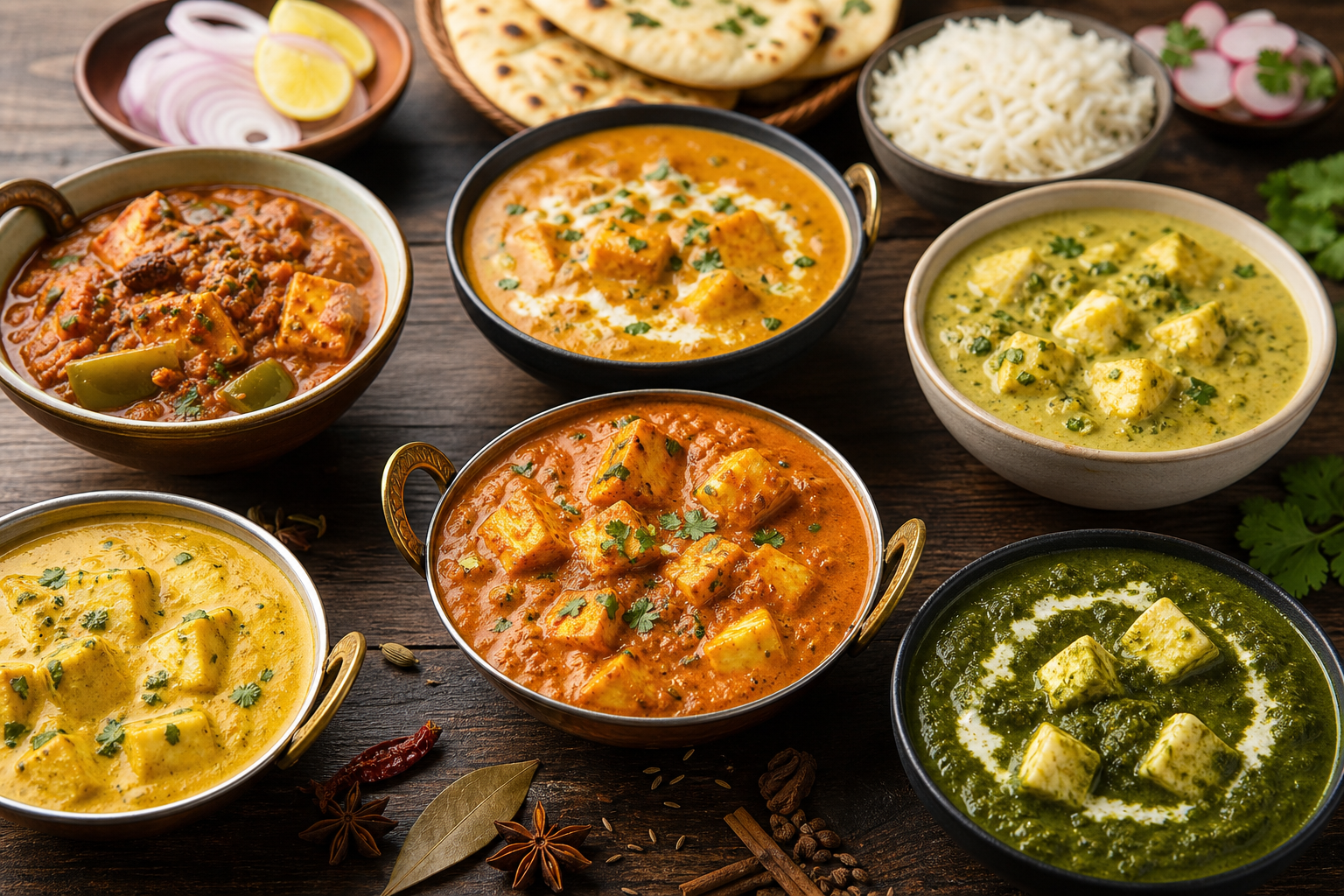
How we compared paneer curry varieties
This article compares seven common paneer curry varieties using five concrete axes so you can choose quickly. Selection criteria are flavor profile, richness and fat level, typical spice level, paneer texture and handling in the sauce, and best pairings or occasions. The comparison is attribute based, not a ranked taste test. Where relevant, technical notes about paneer composition and labeling are cited from a paneer production review and a practical buying guide to help you make informed choices in the store or at a restaurant (PMC review, Credihealth guide).
Selection criteria explained
- Flavor profile: sweet, buttery, smoky, herbaceous, or tangy.
- Richness: how creamy or oily the curry typically is, which affects calorie density and suitability for a lighter meal.
- Spice level: usual heat range and how to request milder or hotter preparations.
- Paneer texture and handling: whether large cubes, charred pieces, crumbled, or scrambled works best.
- Best pairings and occasions: breads, rice, and when each curry shines.
What we did not compare
We do not rate individual restaurants or recipes, and we do not assert that any variety is universally “best.” Use these attributes to match the curry to your taste, diet, and the meal occasion.
What paneer is and which factors change curry results
Paneer basics
Paneer is a fresh, acid-coagulated Indian cheese commonly made from cow or buffalo milk and used in many curries across South Asia. Its mild flavor and non-melting texture let it absorb sauces without turning runny, which is why it appears in so many different curry styles (PMC review).
How production and composition affect the result
Fat content, milk source, coagulant, and processing influence paneer texture. Higher-fat or “malai” styles give denser, creamier cubes that feel richer in buttery gravies. Lower-fat paneer can be firmer and may crumble more easily in stir or scramble dishes. Branded paneer packaging should show composition and best before or expiry dates so you can compare quality when buying (PMC review).
What to look for on a paneer label
Check the ingredient list, fat and protein content, and any preservatives. For people with sensitive digestion, some guides note that milk type and processing matter, for example whether paneer is made from A2 milk, which some sources associate with easier digestibility for certain eaters (Credihealth guide).
Seven paneer curry varieties compared side by side
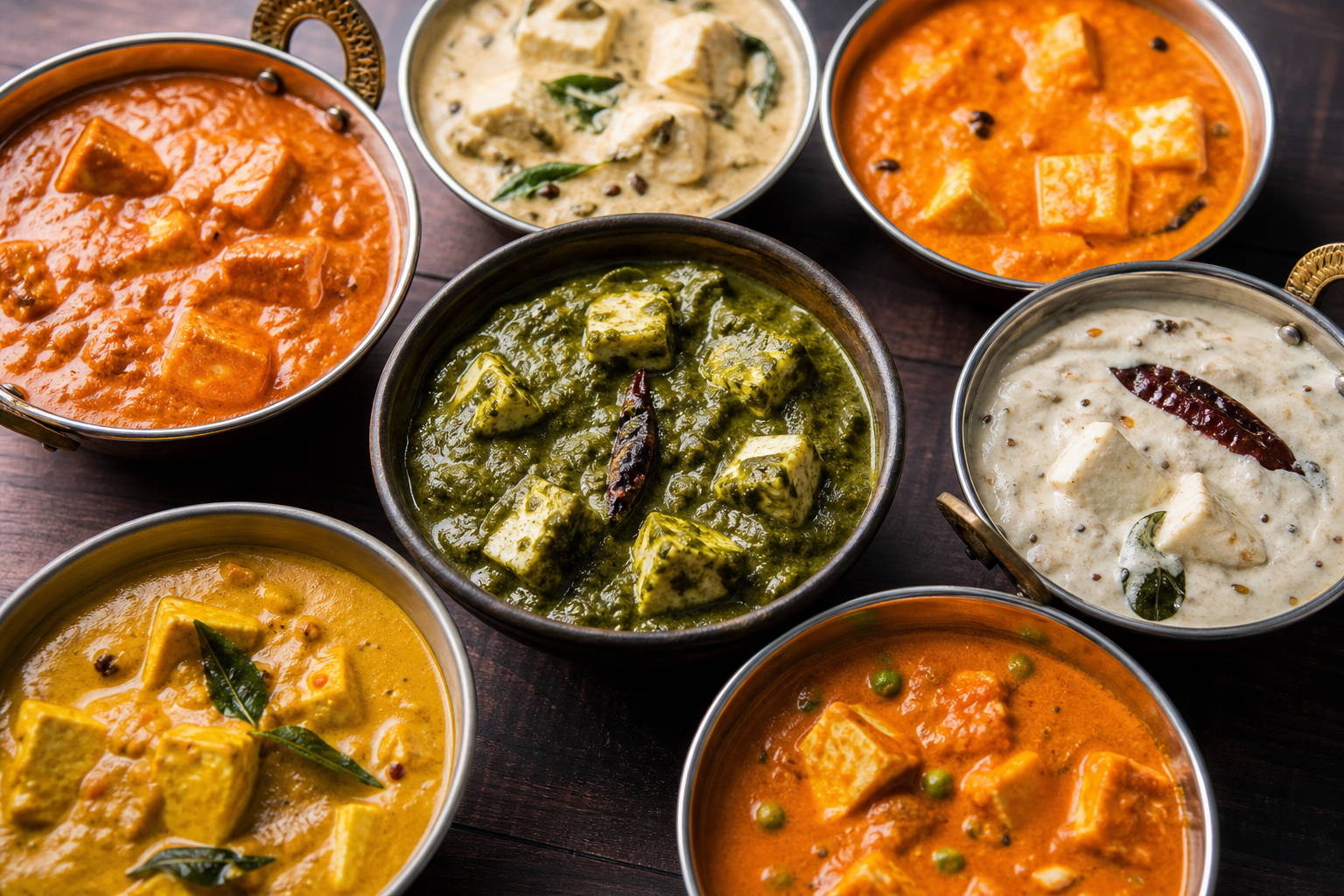
Each mini-profile below gives flavor, richness, spice, paneer handling tips, and ideal pairings so you can scan and decide.
Paneer butter masala (paneer makhani)
Flavor profile: Rich, sweet, and tomato-buttery with subtle garam masala notes.
Richness: High, usually creamy from butter, cream, or cashew paste.
Typical spice level: Mild to medium, easy to request milder for kids.
Paneer texture and tips: Large, soft cubes hold up well in smooth, creamy gravy. Use malai or higher-fat paneer for an indulgent mouthfeel.
Best pairings or occasions: Comfort meal, date night, or when you want a rich curry with butter naan or saffron rice.
Paneer tikka masala
Flavor profile: Smoky and charred from grilled paneer, with a tangy tomato-cream sauce.
Richness: Medium to high; charred pieces reduce perceived heaviness.
Typical spice level: Medium, with a smoky edge that complements moderate heat.
Paneer texture and tips: Best when paneer is marinated and charred or seared before adding to the sauce; large cubes or skewered pieces retain chew.
Best pairings or occasions: Casual dinners where you want a grilled note, pairs well with butter or basil garlic naan.
Shahi paneer
Flavor profile: Luxurious, mildly sweet, and nutty thanks to cream, milk, or cashew paste.
Richness: Very high, often the creamiest of paneer curries.
Typical spice level: Mild, very accessible for families.
Paneer texture and tips: Use soft paneer cut into generous cubes so each bite is silky.
Best pairings or occasions: Festive meals or special occasions where you want a decadently mild dish.
Palak paneer
Flavor profile: Herbaceous and slightly bitter from pureed spinach, balanced with gentle spices.
Richness: Medium, can be lighter if cream is reduced.
Typical spice level: Mild to medium, depends on the amount of chilies used.
Paneer texture and tips: Cubes are often simmered in the green sauce; firmer paneer keeps structure longer.
Best pairings or occasions: A fresher, greener option that works well for weekday lunches or when you want a vegetable boost.
Kadai paneer
Flavor profile: Bold and peppery with chunky bell peppers and a tomato-onion base.
Richness: Medium, with more texture than cream.
Typical spice level: Medium to hot, often features coarse, toasted spices.
Paneer texture and tips: Large cubes or seared pieces give a satisfying chew; char slightly to add depth.
Best pairings or occasions: When you want a rustic, spicy entrée that pairs with plain rice or naan.
Mutter paneer
Flavor profile: Mild tomato and onion base with sweet peas adding pop.
Richness: Medium, generally lighter than butter gravies.
Typical spice level: Mild to medium, family friendly.
Paneer texture and tips: Cubes work well; peas and paneer together make it a balanced plate.
Best pairings or occasions: Everyday meals and lunchboxes, easy for sharing with kids.
Paneer bhurji (scrambled paneer)
Flavor profile: Bright, oniony, and spiced; more textured than saucy curries.
Richness: Low to medium, often the lightest option.
Typical spice level: Variable, can be made mild or spicy.
Paneer texture and tips: Crumbled or grated paneer is sautéed with onions and spices; great for wraps or as a side.
Best pairings or occasions: Brunch, wraps, or when you want a lighter, quicker paneer option.
Decision checklist: choose by taste, diet, and occasion
Three quick pick paths
- Comfort and richness: pick Paneer butter masala or Shahi paneer for creamy, indulgent meals.
- Fresh and green: pick Palak paneer when you want a veggie-forward, slightly lighter plate.
- Smoky and charred: pick Paneer tikka masala or Kadai paneer if you like grilled flavors and chew.
Dietary modifiers to apply
If you want lower fat, ask if the kitchen can use less cream or a lighter gravy. If lactose or digestion is a concern, check paneer composition and how it is made, since milk source and processing affect tolerance (Credihealth guide, PMC review).
Ordering tips for spice and kids
Request mild or medium spice, or ask for spice on the side so children or sensitive eaters can control heat. For families, choose a milder creamy curry plus a lighter option like palak or matar paneer so everyone has choices.
Common objections and practical solutions
Lactose and paneer
Some people with lactose sensitivity tolerate paneer better than fluid milk, but responses vary. If you are sensitive, ask whether the restaurant uses fresh paneer, what milk type it is made from, and whether they can reduce cream in the gravy. Technical guidance about milk type and processing can help when choosing packaged paneer (Credihealth guide, PMC review).
Paneer too crumbly or rubbery
Crumbly paneer often indicates lower fat or overworking, while rubbery paneer can come from overheating. For saucy curries choose firmer, higher-quality paneer, or ask the kitchen to sear or char cubes briefly to improve texture.
Portion and timing concerns
If you worry about portion size, order combos or add a side of rice and a bread to share. For fast pickup, Divine notes a quick pickup option of about 15 minutes on their site; use the online ordering page to confirm current wait times and menu availability (Divine - The Indian Cuisine).
How to order paneer curries in Edmonton from Divine
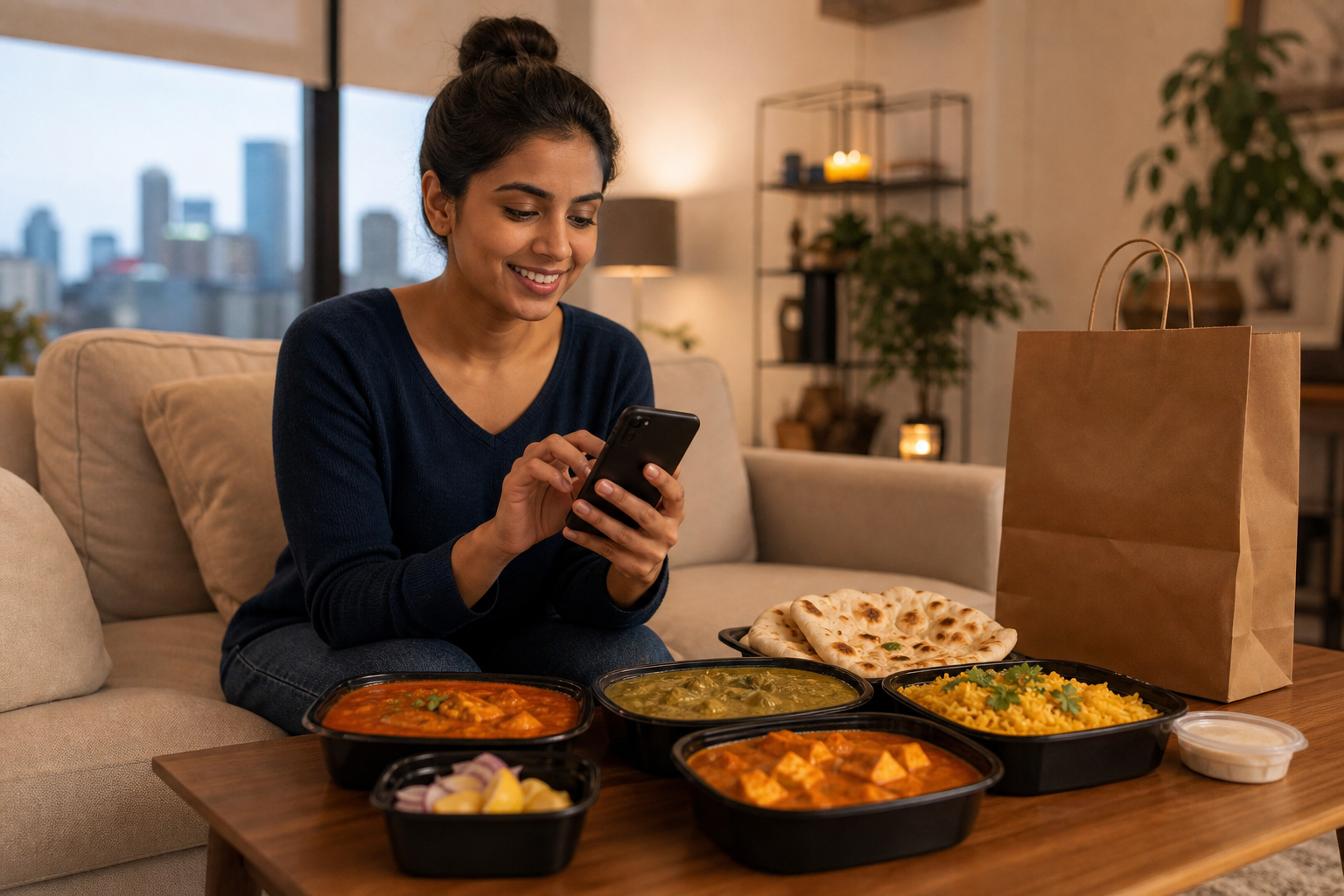
Order online and pickup tips
Confirm the paneer curry you want on the online menu, choose your spice level, and select pickup or delivery. Divine highlights a fast pickup experience of about 15 minutes, and the location is at 11215 Jasper Ave with daily hours typically 11:00 to 23:00; check the site for current availability and to place an order (Divine - The Indian Cuisine).
What to ask when calling or ordering
- Ask whether the paneer is house made or branded, and whether the product label lists fat, protein, and preservatives.
- Request your preferred spice level, and ask for sauce on the side if you plan to reheat later.
- Confirm estimated pickup time and portion guidance for sharing.
Best pairings and add ons to order with paneer curries
Complete the meal with breads like butter naan or basil garlic naan, rice such as saffron rice or plain rice, and a cooling raita or vegetable samosa starter. For family orders consider an all-day combo or a mix of a creamy curry and a lighter green curry so tastes are balanced. Browse the online menu to add these items when ordering (Divine - The Indian Cuisine).
Concise final checklist and call to action
In under 30 seconds: pick creamy and mild for comfort (butter masala, Shahi), pick green for freshness (palak), pick smoky for charred flavor (tikka masala), and ask for mild spice or sauce on the side for kids. When you are ready to order from downtown Edmonton, place your pickup or delivery request through Divine's online ordering page to check the menu and current pickup time (Divine - The Indian Cuisine).
Frequently asked questions
Is paneer safe for people who are lactose intolerant
Paneer is a concentrated fresh cheese and some people with lactose sensitivity tolerate it better than milk. Tolerance varies by individual, so check how the paneer is made and consider lighter gravies or reduced cream. For technical guidance on composition and factors that affect digestibility see the paneer production review and buying guide (PMC review, Credihealth guide).
How can I tell store paneer from restaurant paneer before I order
Ask the restaurant whether their paneer is house made or sourced from a brand, and whether the product label lists fat, protein, and preservatives. Branded paneer should include composition and a best before date on its packaging (PMC review).
Which paneer curries are mild enough for kids
Shahi paneer and paneer butter masala are typically the mildest and creamiest choices. Mutter paneer and palak paneer are also usually gentle on spice, but always ask for a mild heat level for children.
What should I ask the restaurant when I want a lower-fat paneer option
Ask if the kitchen can use less cream or no cashew paste, or whether they can prepare the curry with a lighter tomato or spinach base. Request firmer paneer and less added butter to reduce overall richness.
How long does it usually take to pick up an online paneer curry order at Divine on Jasper Ave
Divine notes a quick pickup option of about 15 minutes on their site. Confirm current pickup timing when you place the online order or call the restaurant to avoid surprises (Divine - The Indian Cuisine).
Craving Authentic Indian Food in Edmonton?
Order Edmonton's favourite Butter Chicken, Lamb Biryani, and award-winning vegan dishes from DIVINE – The Indian Cuisine on Jasper Avenue.
Order Online Now