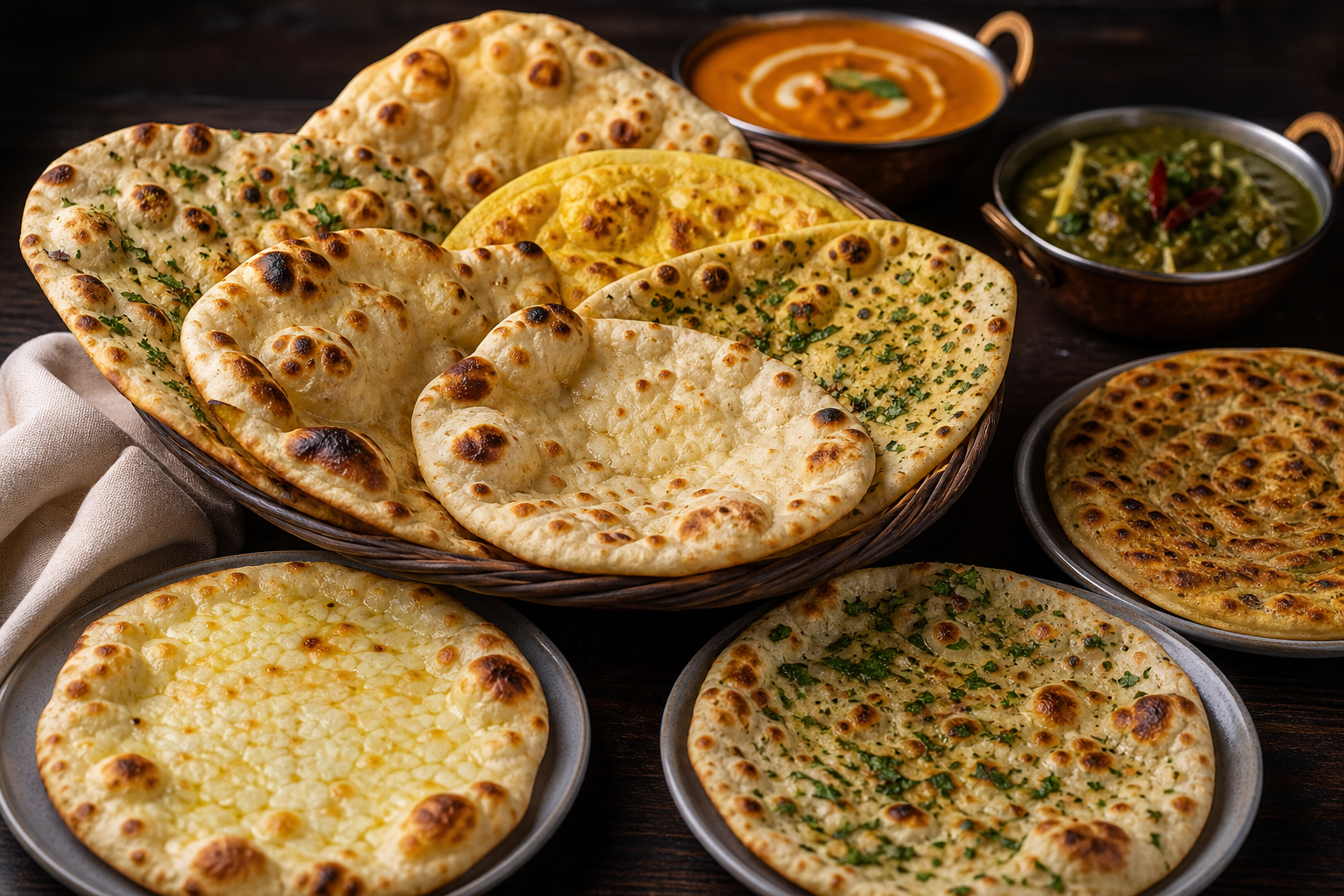
How to compare naan types
This article compares popular naan bread types using six practical criteria you can use when ordering for pickup or delivery: texture, flavour and toppings, best pairings, suitability for sharing or stuffing, reheating friendliness, and ordering practicality. Those criteria answer common concerns like "Will garlic naan be too strong for kids?" and "Will naan arrive soggy on delivery?".
For culinary background, naan is a leavened flatbread traditionally baked in a tandoor oven and adapted across South Asia into many regional varieties. Food guides note there are more than 30 distinct Indian breads in circulation, with naan among the best known examples (MICHELIN Guide, King Arthur Baking).
Common naan bread types and what sets them apart
Below are the naan varieties you will most often see on restaurant menus, with concise notes so you can match them to meals and ordering scenarios.
Plain naan
- Texture: Soft, chewy and slightly puffy. Thickness varies by kitchen but it is generally the most neutral base.
- Flavour: Mild, lightly yeasted. No added butter or strong seasonings.
- Best for: Dipping into saucy curries, scooping biryani, and feeding groups that include picky eaters.
- Why order it: Plain naan is versatile and cost efficient, so it is the safe default on most menus (KimecoPak).
Butter naan
- Texture: Soft with a slightly richer mouthfeel because butter or ghee is brushed on after baking.
- Flavour: Buttery and comforting, it can make mild sauces feel silkier.
- Best for: Butter Chicken, creamy kormas and milder curries.
- Menu note: Divine lists Butter Naan on its menu, making it a convenient option when ordering online for pickup or delivery from Jasper Avenue (Divine - The Indian Cuisine).
Garlic naan and basil garlic naan
- Texture: Like plain naan but finished with a garlic-butter topping; basil versions add a fresh herb lift.
- Flavour: Pronounced garlic and herb notes that can dominate very subtle dishes yet complement grilled meats and Indo-Chinese plates.
- Best for: Kebabs, tandoori mains, and Indo-Chinese dishes where an umami, savoury contrast is welcome.
- Availability: Divine explicitly offers Basil Garlic Naan, so it is available when you order pickup or delivery from the restaurant website (Divine - The Indian Cuisine).
Stuffed naan (cheese, potato and other fillings)
- Texture: Thicker and denser at the filling, so it holds up well when eaten alone or used as a sandwich base.
- Flavour: Filling dependent: paneer or cheese adds richness, aloo adds comforting starch and spice.
- Best for: Eating on its own as a snack, pairing with light sauces, or serving as a heartier single portion.
- Menu note: Stuffed naans are often premium items, so confirm availability before ordering.
Thinner and crisper naans (Afghan-style and regional variants)
- Texture: Thin, crisp edges with a chewier centre. When very thin they can be almost cracker-like.
- Flavour: Toasty, smoky notes from high-heat baking.
- Best for: Biryani and fried-dish pairings where a crisper bread adds a useful textural contrast.
- Context: Regional variations exist across Central and South Asia, and some kitchens offer these thinner styles for contrast (The Kabab Shoppe).
Which naan to order with popular dishes
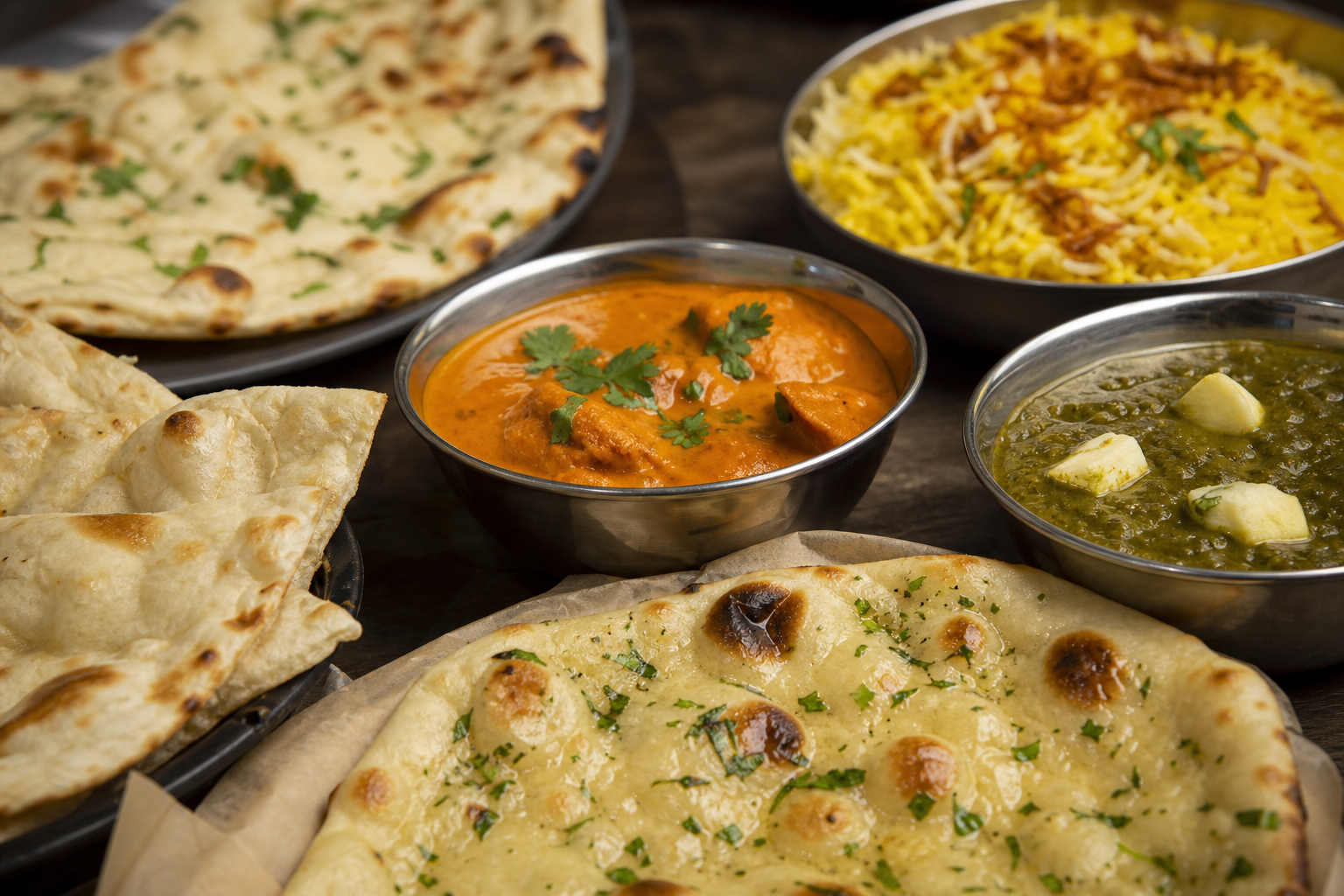
Choose naan by how its texture and flavour interact with the main dish. Below are direct pairing recommendations using examples from Divine’s menu and common Indian and Indo-Chinese mains.
- With Butter Chicken: Butter naan or plain naan are the top matches. Butter naan complements the creamy tomato sauce, while plain naan keeps the curry flavours front and centre (Divine - The Indian Cuisine).
- With biryani: Plain naan or a thinner crisp naan works best. A thin or neutral bread avoids adding heaviness and lets aromatic rice and spices shine.
- With Indo-Chinese dishes: Basil garlic naan or garlic naan creates a bold, savoury contrast that pairs well with soy-sweet and chilli-forward plates.
- With kebabs and grilled meats: Garlic or basil garlic naan complements charred flavours; stuffed naan can act as a satisfying wrap base for handheld bites.
- With vegetable curries and dal: Plain naan is the safest pick for flavour balance; butter naan adds richness if you want a creamier mouthfeel.
If you are ordering combinations, consider mixing two types of naan so the group can try both neutral and flavoured options. For example, pair Butter Chicken with one butter naan and one basil garlic naan for contrast.
Which naan is best for sharing, stuffing, and picky eaters
Use portioning and intensity to guide group orders.
- Sharing with a group: Order plain naan as the default, then add one or two flavoured naans to broaden the flavour choices. A general rule of thumb is 1–2 naans per adult depending on appetite and whether you have rice or multiple sides.
- Stuffing or making wraps: Thicker stuffed naans and plain naan work well because they resist tearing when folded around fillings.
- Picky eaters and children: Plain naan or butter naan are gentle, familiar options. Garlic-heavy naans may be too intense for some children, so check preferences before you order.
Freshness, pickup timing and reheating tips
Packaging and timing matter most for takeout. Divine promotes quick pickup with an approximate 15-minute turnaround for online orders; that speed helps naan arrive fresher when you choose pickup (Divine - The Indian Cuisine).
If you order delivery, ask the restaurant to pack naan separately from saucy items or to use a breathable sleeve rather than a fully sealed bag to reduce steam buildup. Small changes like separate packaging and ventilated sleeves help keep the bread from becoming soggy in transit.
Reheating restores texture and flavour. Practical methods include:
- Oven: Preheat to about 350°F (180°C), wrap naan in foil and warm for 5 to 8 minutes. This method warms the bread evenly and is good for several pieces.
- Skillet: Heat a dry skillet over medium-high and warm each naan 30 to 60 seconds per side to revive char and crispness.
- Microwave: Use only in a pinch. Cover naan with a damp paper towel and heat in short bursts to keep it soft, knowing this will not restore crisp edges.
Each reheating method trades speed for texture. A skillet gives a quick return of char, while the oven provides even warmth for multiple naans.
Dietary and allergen notes to check before you order
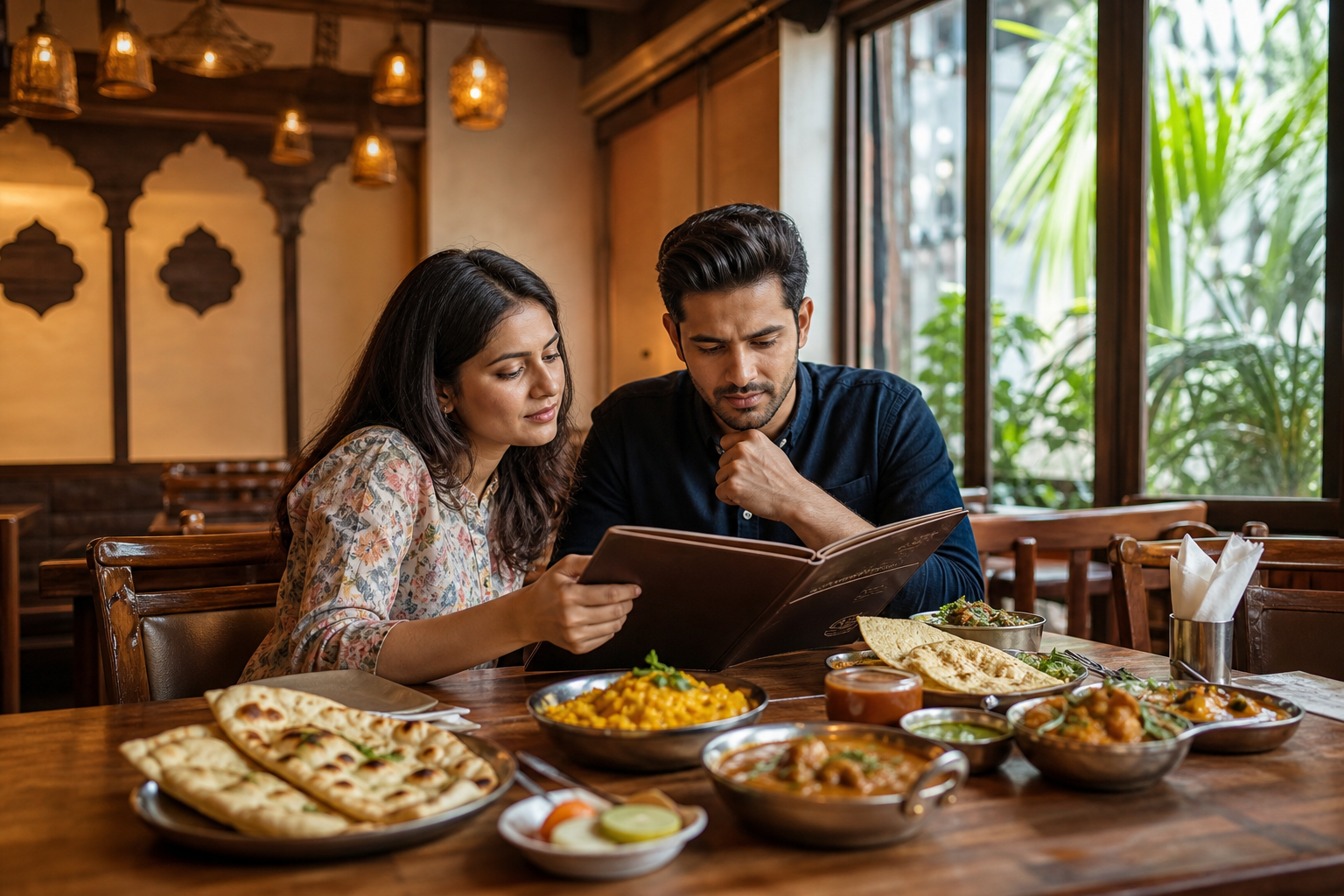
Naan is typically made from wheat flour so it is not gluten free. Many recipes include dairy products like milk, butter or ghee; stuffed and buttered varieties commonly contain cheese or extra butter. Plain naan is often vegetarian, but kitchens may add milk, yogurt or egg to the dough in some recipes.
If you have allergies or strict dietary needs, check menu labels and ask staff directly before you order for pickup or delivery. Divine’s menu pages list breads and categories, but contacting the restaurant will confirm whether a specific naan contains dairy, egg or other allergens (Divine - The Indian Cuisine, King Arthur Baking).
Quick ordering checklist for Divine pickup or delivery
Use this mobile-friendly checklist when ordering from Divine online to get the naan experience you want.
- Pick a base: plain naan for versatility, butter naan for creamy dishes, basil garlic naan for bold flavour.
- Match naan to mains: butter for Butter Chicken, plain or thin for biryani, garlic or basil garlic for Indo-Chinese or kebabs.
- Choose quantity: plan roughly 1–2 naans per adult depending on appetite and number of sides.
- Note dietary needs: request no butter or clarify dairy in order notes if needed.
- Prefer freshness: select pickup to use Divine’s quick ~15-minute turnaround when possible (Divine - The Indian Cuisine).
- Packaging tip: ask for separate packaging for naan when ordering delivery to limit steam and sogginess.
Frequently asked questions
What are the most common naan bread types and how do they differ?
The most common types you will see are plain naan, butter naan, garlic naan (including basil garlic), stuffed naan, and thinner or crisper regional variants. They differ by texture, toppings or fillings, and how they pair with dishes. For a wider view of Indian breads and how naan fits into the family, see the MICHELIN Guide overview (MICHELIN Guide).
Which naan pairs best with Butter Chicken from Divine?
Butter naan or plain naan are the best matches. Butter naan complements the rich, creamy tomato sauce by adding a matching buttery note, while plain naan keeps the curry as the main flavour. Divine lists Butter Naan and Butter Chicken among its popular menu items (Divine - The Indian Cuisine).
Can I order Basil Garlic Naan or Butter Naan from Divine?
Yes. Divine’s online menu lists Basil Garlic Naan and Butter Naan, and both are available when you order for pickup or delivery from the restaurant website (Divine - The Indian Cuisine).
How should I reheat leftover naan so it tastes fresh?
Reheat in a hot oven wrapped in foil for a few minutes for even warmth, or warm in a hot skillet for a quick return of char and crispness. Microwaving under a damp paper towel works in a pinch to keep the bread soft but will not restore char or crisp edges (King Arthur Baking).
Is naan vegetarian and what allergens should I check for?
Many naans are vegetarian but common allergens include gluten and dairy. Butter naan and garlic naan often contain butter or ghee; stuffed naans may include cheese or other dairy fillings. Verify ingredients with the restaurant if you have allergies or strict dietary requirements (Divine - The Indian Cuisine).
Ready to order from Divine - The Indian Cuisine?
Craving Authentic Indian Food in Edmonton?
Order Edmonton's favourite Butter Chicken, Lamb Biryani, and award-winning vegan dishes from DIVINE – The Indian Cuisine on Jasper Avenue.
Order Online Now